Second Hand Water Tanker Trucks: How to Choose the Right Capacity and Condition
A water tanker used for construction dust suppression has a different duty cycle from a truck moving water between towns. Typical project enquiries may involve 6x4 water tankers around 20 cubic metres, while other capacities and chassis layouts are available. Decide on tank capacity after considering route length, refill access, water density, vehicle weight limits and site access.
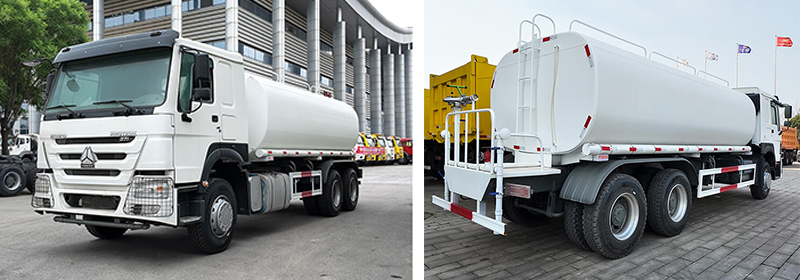
The chassis is only half the vehicle
Inspect the truck engine, gearbox, axles, tires and brake system as carefully as you would on a cargo truck. Then inspect the tank and its attachments: baffles, mounting brackets, welds, manholes, valves and the suction/discharge pipework. Rust around mounting points or signs of repeated repair deserve closer investigation.
Check the pump and spraying equipment
The pump, power take-off, hoses and nozzles determine whether a water tanker can actually do its job. Ask for a video showing suction, discharge and spraying functions. Check for abnormal vibration, noise, leaks and irregular pressure. A large tank with a weak pump may perform poorly on a construction site.
Look at practical operation and maintenance
Confirm the loading height, fill point arrangement, spray coverage, hose connectors and access for cleaning. If buying for a hot or dusty region, inspect the cooling system and air filtration as well. A clear specification should identify tank material, nominal volume and the tested functions; the actual usable load must still comply with the local weight limits.
For a quotation, provide the destination country, intended application, expected load and preferred truck configuration. Snail Truck can share available vehicle specifications and inspection materials for review.

 Tang