
When choosing a commercial truck, horsepower is one of the first specifications buyers compare. Options like 371HP, 420HP, and 460HP are common in brands such as HOWO, SHACMAN, and FAW—but many buyers wonder whether the difference in horsepower truly affects load capacity and fuel consumption. In practical operations, horsepower plays a major role in how the truck handles weight, terrain, and fuel efficiency, and selecting the right engine power can significantly impact long-term operating costs.
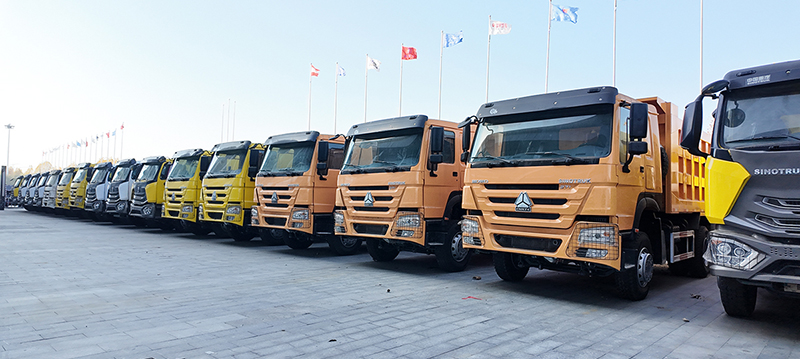
To begin with, horsepower strongly influences a truck’s load-handling capability. Although the chassis and axles officially determine the maximum load capacity, trucks with higher horsepower engines can pull heavy loads more easily, especially in demanding environments. For example, a 371HP truck performs well on general cargo routes, flat highways, and moderate loads. However, when climbing steep slopes, operating in mining areas, or hauling full-capacity loads over long distances, a 420HP or 460HP engine provides smoother acceleration, more stable power output, and better overall control. While horsepower doesn’t legally increase the rated load, it improves how efficiently the truck manages that load.
Fuel consumption is another key concern. Many assume higher horsepower always means higher fuel usage—but fuel efficiency depends on the workload and terrain. A 371HP engine is generally more fuel-efficient under light or medium loads on flat roads. However, if the truck is constantly pushed to its limits, the engine must work harder, leading to increased fuel consumption and more frequent maintenance. In such conditions, a 420HP or 460HP engine often performs more efficiently because it provides enough torque to move heavy cargo without excessive strain. Surprisingly, in mountainous or off-road routes, higher horsepower trucks may actually consume less fuel compared to lower-power engines doing the same job.
Additionally, operating environment plays a major role in choosing horsepower. Construction sites, mining zones, and ports benefit from 420HP or 460HP engines due to high torque and reliable pulling strength. Regional logistics or city distribution may find 371HP engines perfectly adequate and more cost-effective. Over-specifying horsepower leads to unnecessary fuel cost, while under-specifying can result in engine overload and high wear-and-tear.
In the end, the differences between 371HP, 420HP, and 460HP engines matter greatly depending on the type of operation. Higher horsepower doesn’t increase rated load capacity, but it improves performance with heavy loads and in challenging terrain. Fuel consumption varies with usage, and choosing the right horsepower can reduce overall costs. For businesses seeking stability, efficiency, and long-term reliability, matching horsepower to actual working conditions is the best strategy for maximizing productivity and controlling fuel expenses.
Contact: Snailtruck
Email: snailtruck@snailtruck.com
Phone/Whatsapp: +86 19558729116
Add: No. 1, South Of Taifu Road, Liangshan Economic Development Zone
 Tang
Tang